Category: Raw Education

  • How to create a Fishbone Diagram

    How to create a Fishbone Diagram

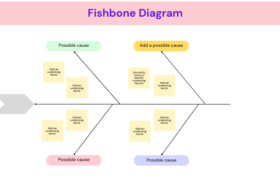
    A fishbone diagram, also known as a cause-and-effect diagram or an Ishikawa diagram, is a visual tool used to identify and analyze the potential causes of a problem or an effect. It was developed by Kaoru Ishikawa, a Japanese quality control expert, in the 1960s.

    A fishbone diagram is nothing but to examine the causes and effect in a simple manner.

    1 Last word proton refers to pharmaceutical online.

    2 It’s a chart based diagram to bifurcate all the causes of problem in chart with accurate findings and their solutions.

    3 Analyze all the possible causes of problem. You should ask your inner mind why this is happening you can write on a chart.

    4 Again analyze about each cause and write their sub cause and try to go deep and deep to each and every level of causes.

    5 You should focus on ideas to have solutions.

    6 And your should possessive towards the process and not the people.

    The main categories typically used in a fishbone diagram are the 6Ms: Manpower, Method, Machine, Material, Measurement, and Mother Nature (environment). These categories cover a wide range of factors that can contribute to a problem or effect.

    A valuable tool for problem-solving and analysis. Its visual nature helps to organize and categorize potential causes,.

  • A complete guide for Pan card process

    A complete guide for Pan card process

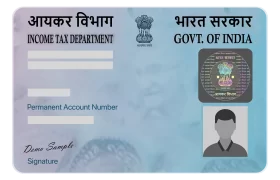
    1 Pan card (Permanent account number) it is a 10 digit Alfa numeric number which is provided income tax depth in laminated manner.

    2 To register, it will take 10 to 15 days.

    3 Pan Card is very useful for income tax return/ Tds/ property.

    4 To have as watch on all sorts of financial transactions, investments, loan repayment because of pan card it is very easy to detect and  monitor the transactions whether it is been not misused.

    5 CBDT under income tx dept process the pan card.

    6 Initial of 4th digit of pan card:

    • P- Propetier
    • F- Partnership
    • C- Company private ltd
    • L- Llp
    • J- Artificial Judicial person
    • H- Huf (Hindu undivided family)
    • A- Associations of persons
    • T- Trust

    7 Pan Card 5th digits is our initial of surname.

    8 Pan Card is like debit, credit card wherein your photo birth date is mention in a plastic card format. There is hologram sticker which is been secure and safe.

    9 For pan card registration:

    • Voting id
    • Ration card
    • Passport
    • Adhar card
    • Address proof.
  • A complete guide for Fssai License

    A complete guide for Fssai License

    1 Fssai license is compulsory to these who are manufacturing food products and it is mandatory.

    2 Fssai (Food safety and standards authority of India) which comes under health department of Indian ministry. Food act 2006 is the base wherein Fssai is established.

    3 Fssai is a 14 digit number which is mention on license.

    4 For which business Fssai is compulsory:

    • Dairy unit
    • Oil processing unit
    • Meat unit
    • Repackers
    • All sorts of food processing manufacturing unit
    • Hotel canteen
    • Caterers
    • Import Export
    • Online food delivery
    • Relabelled

    5 Fssai registration is mandatory for business which have less than  12 lakh revenue per year.

    6 If the business revenue is more then 12 lakhs to 20 crore then state Fssai license required.

    7 If it is more than 20 crore revenue central Fssai license required.

    8 Documents require for Fssai license:

    • Adhar card
    • Pan card
    • Pass port size photo
    • Address proof

    9 Fssai validity:

    • It is valid up to 1 to 5 years and after that you can update it.
  • Starting and Succeeding in the Maize Business

    Starting and Succeeding in the Maize Business

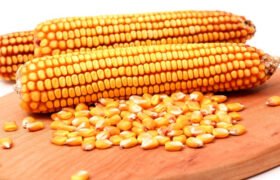
    1 Maize processing business can be done in various methods. It is been useful for animal food mainly in poultry business.

    2 In maize there are 75% starch, 8 to 10% protein and 4 to 5% aliphatic protein. We can get healthy oil from maize and it can be used for medical purposes.

    3 In dry maize processing you can have added value by products like corn upma, corn rawa and oil.

    4 In wet maize processing you can add starch, sugar and for oil you can mix sulphride oxide in water and kept maize in that mixture for 30 to 35 hrs and it can be made in form of starch powder or oil cake also which is been used in the process of cloth, medicinal or for baking products.

    5 Maize powders is very resourceful for teenager or baby corn to build their health.

    6 It is been widely used for soup sauce process.

    7 If you or looking to start venture in this maize processing business it has wide growth in this field with all machinery and land, marketing distribution you can get the in depth knowledge form training institutes in India.

  • Basics of Jute bag process

    Basics of Jute bag process

    1 Jute bags are in growing demand due to ban on plastic bags.

    2 It is a degradable product which is good for our ecosystem and is also called as golden fiber.

    3 It is a high capital investment business if you want in large production it consists of procuring machinery, raw materials which include manpower.

    4 If you want to start in a small scale business you should start at home with low capital.

    5 There are various types of jute bags you can look at:

    • Bio degradable unlamented
    • Food grade LDPE
    • Jute carrying bags
    • Shopping bags
    • Ladies purse
    • Promotional bags.
  • Starting a Cashew nuts Processing Business

    Starting a Cashew nuts Processing Business

    1 The Indian market and international markets have a high demand for cashew processing businesses. Cashew nuts are extensively produced in Kerala, Andhra Pradesh, Orissa, Goa, and Maharashtra.

    2 When discussing Maharashtra, particularly the Kokan belt encompassing Sindhudurg, Ratnagiri, and Raigad, it is important to note the significant production levels.

    3 Kaju production: In traditional way there are cashew nuts trees are planted after the maturity period , over the seed falls on the ground from cashew apple. The seeds are then collected and send to processing for further development.

    4 Cashew can be use for preparing gravy, sweets or making dryfruits. In goa  it is famous for feni.

    5 The seeds are processed while keeping them in 4 to 5 days in wet condition. After that it is been boil in 90 o 100 centigrade temperature for 45 minutes in broiler and after twelve hrs it is been kept in normal temperature to get soaked.

    6 Licenses:

    • Roc
    • Shop license
    • Gram panchayat license in rural place
    • Fssai
    • Msme

    7 Machinery:

    • Cashew drier
    • Cutter shelling machine
    • Grading table
    • Peeling table
    • Other equipment

    8 A cashew nut processing plant requires land which is easily available to source your raw product, electricity, water and transportation. Build, Oover the seed falls on the ground from cashew apple a great quality product with proper sales and marketing skills sell on B2C OR B2B websites.

  • What are the Steps to Start a Tomato Processing Business?

    What are the Steps to Start a Tomato Processing Business?

    1 Food processing business has great demand in India and all over the world.

    2 Food processing business can be termed as value added product for farmers or for small scale businessmen.

    3 As talking about tomato processing business there are ample amount of opportunity in tomato processing sector.

    4 Tomato is household vegetable which is in daily consumption or in the processed product market.

    5 Tomato is one of the important food crops in India. It grows all over India but some of the major producing states are Maharashtra,, Bihar, UP, Karnataka, Madhya Pradesh and West Bengal. It is a rich source of vitamin A, C potassium minerals an fibres. It is used in salad, pickles or for tomato ketchup. It’s a huge industry and much needed product along fast food and that’s the reason it is been in huge demand all across the world.

    6 Registrations:

    • Trade license form the local authority
    • Msme
    • Fssai
    • Vat
    • Bank current account
    • Bis certificate for standardization

    7 Machinery:

    • Storm boiler
    • Pulpifier cap exhaust
    • Processing tank
    • Pastener tank
    • Ss tilt type
    • Steam jacketed vacuum kettle of cap

     8 You can opt for juice/ Ketchup/ pulp puree or in sauces also there are wide opportunities to start this  venture.

  • Starting a Cello Tape Making Business

    Starting a Cello Tape Making Business

    1 Cello tape has  a great demand in Indian market as to pack the goods or in household supplies or in packaging wherein cello tape is needed.

    2 Types of cello tape:

    • Masking tape
    • Packaging tape
    • Filament tape

    3 There are pressure sensitive tapes also available which are in two different types. Brown colour and transparent tape are commonly used and it is been in great demand.

    4The cello tape business can be easily started in low investment from house also.

    5 Machinery: Core cutting machines as it is manual process to cut paper core which is according to the size required as it comes around 25 to 35per kg and it is a long paper core which is cut down to small paper core as per the requirement.

    6 As there are multiple types of tapes in market which changes as per the machinery requirement. To have the checks of machinery you can visit b2b sites such as India mart, Alibaba etc.

    7 Market the product and at initial stage sell them at low margin with good quality and register your business according to which jurisdiction you fall under. Create a brand and position yourself with good quality.

  • Optimizing growth in the Dal Milling Process

    Optimizing growth in the Dal Milling Process

    1 Dal mill business is great opportunity for farmers for additional income as the market rates are not so stable.

    2 In rural places it can be benefiacial for farmers as the procurement of raw dals like Tur,mug dal or varieties of dal are easily available but one thing you should consider that dal mill process should be established around or nearby were there are considerable amount of population.

    3 Machinery for dal mill consists of graders, detonner, precleaner, graders, aspirators, bucket elevator and packaging unit.

    4 Registrations:

    • License from the local municipality
    •  You can register as LLP or private limited
    • Gst
    • Fssai
    • Msme
    • Ssi registration for subsidy

    5 It has a great potential for rural people to make money. The income and success of dal mill business are based upon the constant supply of raw materials.

  • Understanding the Basics of GST: A Complete Guide

    Understanding the Basics of GST: A Complete Guide

    1 Gst- Goods and service tax is a govt initiative to remove all different types of 32 taxes and it will be only one tax system that is Gst.

    2 The implementation started on 1st July 2017. Before Gst there was two types of taxes which is Indirect taxes and direct taxes.

    • Direct tax: It was property tax, corporation tax, gift car and etc.
    • Indirect tax: Manufacturing tax, customs, selling, vat and etc.

    3 This was all scrapped and one nation tax system revived which is Gst and following are the types of Gst.

    • CGST
    • SGST
    • UTGST
    • IGST

    4 CGST : Central govt gst

    • It marks 9 % gst which is applicable to all states to pay.

    5 SGST : State govt gst

    • It marks as 9 % gst on all goods and services which combine 9 % gst + 9 % Cgst to 18 %

    6 UTGST: Union territory gst

    • Centre ruled union territory which mark as 9% Cgst+9%Utgst to  18%

    7 IGST : Integrated Gst

    • If some goods are moving from one state to other state then taxes will be Igst 9 % + 9 % Cgst which will 18% to pay.

    8 Benefits :

    • Hassle free process tax under one regime to pay.
    • All tax % are same in all states/ It is beneficial for foreign direct investment (fdi) which will be a game changer for the economy.
    • Previously tax % were above 30 to 35 % but due to Gst it has been cut down to 18 %.